What Winter Is Really Like in Bozeman (From a Michigan Transplant)
 By Terrence O'Neil, Bozeman Brokers Real Estate
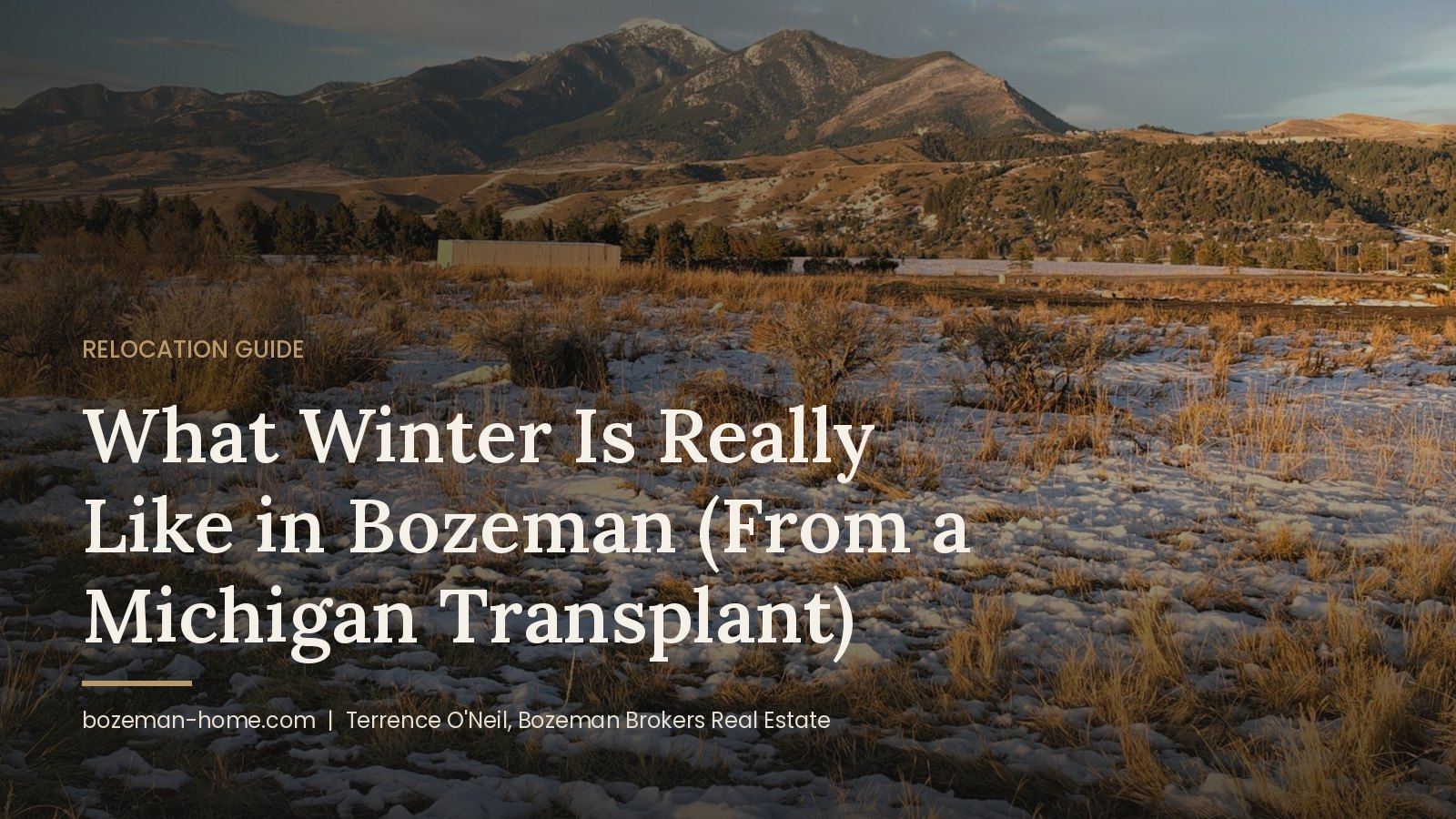
The short answer: Bozeman winters are cold and snowy but often sunnier than people expect. The town averages about 86 inches of snow a year, and January’s average high is about 32°F with an average low around 12°F. The nearby Bridger Range gets roughly 300 inches. What surprises most newcomers is not the snow but the wind, the mountain pass driving, and how dry and bright many winter days are. With the right home, the right tires, and a winter hobby, most people come to love it.
I moved to Bozeman from Grand Rapids, Michigan in April 2024. I thought Michigan had prepared me for anything. In some ways it did. In other ways, Montana winter is its own animal. Here is what relocating buyers should honestly expect.
Bozeman winter by the numbers
- Average snowfall in town: about 86 inches a year.
- Snowfall in the Bridger Range: about 300 inches a year.
- Coldest month: January, with an average high of 31.6°F and an average low of 12°F.
- Snowiest month in town: historically March, at about 15.7 inches.
Those figures come from Visit Bozeman’s winter summary. Any single winter can run warmer, colder, snowier, or drier than average.
How it compares to a Midwest winter
More sunshine
Coming from West Michigan, the biggest difference for me was the light. Bozeman gets plenty of bright, blue-sky days between storms. Cold feels more manageable when the sun is out.
Drier snow
Snow here is often light and dry. It is easier to shovel and fantastic to ski. It also blows around more, which leads to drifts.
Wind
Wind is the part of winter people do not talk about enough. Open ground between Bozeman and Belgrade, and especially around Livingston, can see strong winds that drift snow across roads and driveways. When you shop for a home, notice which direction it faces and whether trees or terrain block the wind.
Cold snaps
Most of the winter is cold but comfortable for outdoor activity. A few times each winter, arctic air drops temperatures well below zero for several days. Those stretches are when good insulation, a reliable furnace, and a garage pay for themselves.
Quick changes
Weather can swing fast. A warm, sunny afternoon can turn into a snowy evening, and mountain passes can change conditions in an hour. Checking road reports becomes a habit.
Driving in winter
This is where newcomers need to adjust the most.
- Snow tires. Dedicated winter tires make a bigger difference than all-wheel drive alone. Most locals swap tires every fall and spring.
- Bozeman Pass. I-90 between Bozeman and Livingston can be icy, windy, and occasionally closed during storms. If you will commute over it, build in flexibility.
- Gallatin Canyon. The road to Big Sky is beautiful and busy, and it demands attention in snow.
- Road reports. The Montana Department of Transportation’s travel information is worth bookmarking.
- An emergency kit. Blankets, water, a shovel, a scraper, and a phone charger stay in the car all winter.
What winter means for the home you buy
- Driveway direction. South-facing driveways melt off. North-facing driveways can stay icy for weeks.
- Garage. An attached garage, ideally insulated or heated, is the most appreciated feature in January.
- Furnace and insulation. Ask for 12 months of utility bills and the age and service history of the furnace and water heater.
- Roof and snow load. Ask how snow slides off the roof and where it lands. A roof that dumps snow onto the front steps is a daily problem.
- Long driveways. On rural property, plan for plowing, either your own equipment or a contractor.
- Mudroom. Somewhere to drop boots, coats, and gear is worth more than you think.
- Radon. Homes stay closed up in winter, which makes radon testing and mitigation especially important in Montana.
The best part: what you can do in winter
Bozeman does not hibernate. Winter is when a lot of people here are happiest.
- Downhill skiing. Bridger Bowl, a nonprofit ski area with about 2,000 acres of terrain, is a short drive up Bridger Canyon. Big Sky is about an hour away.
- Nordic skiing. Crosscut Mountain Sports Center grooms about 28 miles of trails, and the Bridger Ski Foundation grooms about 45 miles at in-town locations.
- Ice climbing. Hyalite Canyon is famous for its frozen waterfalls.
- Ice skating. Outdoor rinks usually open around the holidays.
- Hot springs. Several are within a couple of hours, including Chico Hot Springs in Paradise Valley.
- Yellowstone. The north entrance near Gardiner is the only park entrance open to cars all year, and winter wildlife viewing in the Lamar Valley is unforgettable.
- Trails. Many of the more than 80 miles of in-town trails stay walkable with traction devices.
Winter in the other towns
- Belgrade: similar snow to Bozeman, often more wind on open ground.
- Manhattan and Three Forks: more open and agricultural, with drifting on rural roads.
- Livingston: famous wind, but lower elevation and often slightly milder temperatures.
- Emigrant and Paradise Valley: beautiful and quiet, with longer drives for errands.
- Gardiner: real winter, and the road north through Yankee Jim Canyon can close in severe storms.
Tips from my first winters here
- Buy snow tires before the first storm, not after it.
- Get a good pair of traction devices for icy sidewalks and trails.
- Find a winter hobby early. It changes how the season feels.
- Layer, and invest in a real winter coat and boots.
- Embrace the sunny days. Get outside whenever the sky is blue.
- Connect with people. Community makes the dark evenings fly by.
Should winter stop you from moving here?
For most people, no. Winter is a real part of life in Montana, and it is also a big part of why people love it here. The key is choosing a home and a town that fit how you want to live in December through March. If you are visiting, I recommend coming at least once in winter. If you are buying remotely, I will show you exactly how a home handles snow, wind, and ice before you buy.
A month-by-month look at winter
Every winter is different, but here is the general rhythm most Bozeman residents expect.
- October: the first snow often arrives. Leaves turn, mornings get frosty, and it is time for snow tires.
- November: winter settles in. Days get shorter, and the mountains fill with snow.
- December: Bridger Bowl and Big Sky are typically in full swing for the holidays. Outdoor rinks open.
- January: usually the coldest month, with an average high near 32°F. Bright, cold days alternate with storms.
- February: deep winter with longer days. Great skiing and ice climbing.
- March: historically the snowiest month in town, though warmer days start to appear.
- April: a mix of spring and winter. Snow can fall one day and melt the next, and trails get muddy.
Winterizing your new home
If you buy in the fall or are moving in before winter, run through this checklist:
- Have the furnace serviced and replace filters.
- Disconnect garden hoses and shut off exterior water lines to prevent frozen pipes.
- Check attic insulation and weatherstripping on doors and windows.
- Clean gutters before the first snow.
- Test smoke and carbon monoxide detectors.
- Stock up on ice melt that is safe for pets and concrete.
- Line up snow removal, whether that is a shovel, a snowblower, or a plowing service.
- Keep an emergency kit at home with flashlights, water, and blankets in case of a power outage.
Dressing for a Montana winter
Layering is the secret here. A base layer, a warm middle layer, and a windproof shell let you go from a sunny afternoon to a windy evening without trouble. Add good boots with traction, warm gloves, and a hat, and you are ready for almost anything.
Questions to ask about a home’s winter performance
- What were the highest winter heating bills over the past year?
- How old are the furnace, water heater, and roof?
- Have any pipes ever frozen?
- Where does snow slide off the roof, and has ice damming been a problem?
- Has the home been tested for radon, and is there a mitigation system?
- Who plows the road, and how quickly after a storm?
I ask these questions for every client, whether they are walking the home with me in person or watching on video from another state.
Frequently asked questions
How much snow does Bozeman get?
About 86 inches a year in town and about 300 inches in the Bridger Range.
How cold does Bozeman get in winter?
January averages a high around 32°F and a low around 12°F, with occasional below-zero cold snaps.
Is Bozeman winter worse than the Midwest?
It is often colder at night and windier in places, but sunnier and drier. Many Midwest transplants find it easier to enjoy.
Do I need four-wheel drive in Bozeman?
All-wheel or four-wheel drive helps, but dedicated snow tires make the biggest difference.
Want to see how a home handles winter? Book a free relocation call and I will show you what to look for before you buy.