Pros and Cons of Living in Bozeman: An Honest Local Take
 By Terrence O'Neil, Bozeman Brokers Real Estate
The short answer: The biggest pros of living in Bozeman are world-class outdoor recreation minutes from town, a lively and walkable downtown, a strong sense of community, Montana State University, no sales tax, and an airport with nonstop flights to 29 airports. The biggest cons are high housing costs (a median of about $800,000 in the 2026 Gallatin Valley Housing Report), a gap between local incomes and home prices, growth and traffic, long winters with real wind, and a smaller job market than big cities. Bozeman is a great fit for people who prioritize lifestyle and the outdoors and who plan their finances carefully.
I moved from Grand Rapids to Bozeman in April 2024, and now I help other people make the same move. I love living here, which is exactly why I think relocating buyers deserve an honest picture. Here are the real pros and cons, with numbers where they matter.
The pros
1. The outdoors is part of daily life
This is the reason most people move here. The Main Street to the Mountains trail system has more than 80 miles of public trails, many reachable from neighborhoods. Bridger Bowl, with about 2,000 acres of terrain, is a short drive up Bridger Canyon. Big Sky is about an hour away. Hyalite Canyon offers hiking, fishing, and some of the best ice climbing in the country. Blue-ribbon trout rivers, including the Gallatin, Madison, and Yellowstone, are all within easy reach, and Yellowstone National Park is a day trip.
2. A real downtown
Main Street is full of locally owned restaurants, coffee shops, bookstores, and galleries. It is the kind of downtown where you run into friends on a Tuesday night.
3. Community
People here are active, outdoorsy, and quick to invite newcomers along. Running clubs, ski programs, gyms, and volunteer groups make it easy to build a social circle. It is the part of the move that surprised me most.
4. Montana State University
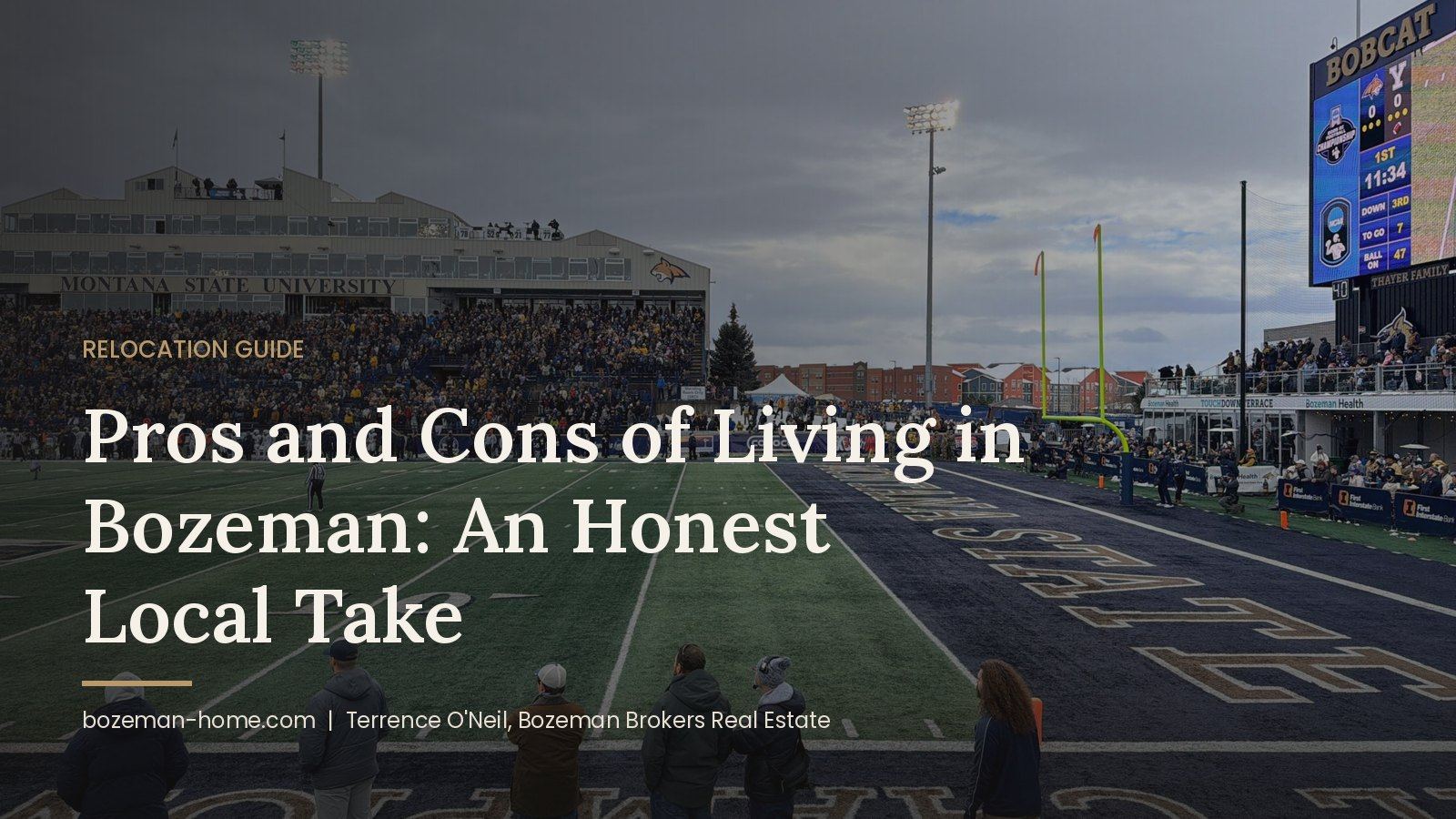
MSU enrolled a record of more than 17,000 students in fall 2025. The university brings Bobcat football, concerts, lectures, and an educated workforce, and supports a growing local tech and research economy.
5. No sales tax
Montana has no general statewide sales tax. It adds up on every purchase, from groceries to cars.
6. Better-than-expected air travel
Bozeman Yellowstone International Airport served a record 2.8 million passengers in 2025, with nonstop flights to 29 airports, including year-round service to Denver, Salt Lake City, Seattle, Minneapolis, Chicago, Dallas, Atlanta, and Los Angeles.
7. Sunshine
Winters are cold, but many days are bright and blue. Coming from the cloudy Midwest, that made a big difference for me.
8. A lower tax rate on your primary home
Montana’s 2026 property tax system gives primary residences a lower, tiered rate. The state projected an average 18 percent decrease for owner-occupied homes compared with 2024, as long as owners apply for homestead status.
The cons
1. Housing is expensive
The 2026 Gallatin Valley Housing Report put the median home price in Bozeman and Gallatin County at about $800,000, roughly double the 2019 county median of $400,000. Average rent for a two-bedroom was about $2,217 a month as of October 2026, according to Rentometer.
2. Incomes have not kept pace
The same report found that buying the median-priced home required an income of about $181,000 based on 2023 data, while the county’s median household income was about $101,000 in 2024. Many locals buy in nearby towns, buy with equity from elsewhere, or rent longer than they planned.
3. Growth and traffic
Gallatin County issued 1,622 residential permits in 2025, including 1,056 in Bozeman. Construction, traffic on 19th Avenue and North 7th, and busier trailheads are part of life now. Some longtime residents feel the town has changed quickly.
4. Winter is long, and the wind is real
Bozeman averages about 86 inches of snow a year, and January’s average low is around 12°F. Snow can fall from October into May. Wind on open ground can drift roads and driveways. If you hate winter, this is not your place.
5. A smaller job market
Bozeman’s economy is growing, but it is not a big city. Many professionals keep remote jobs, start businesses, or accept a pay cut for the lifestyle. Specialized careers may have fewer local options.
6. Higher mortgage rates make the math harder
The average 30-year fixed rate was 7.32 percent on October 22, 2026, according to Freddie Mac, up from 6.19 percent a year earlier. Combined with high prices, that pushes monthly payments up.
7. Second homes and short-term rentals cost more to own
Under the 2026 tax system, homes that are not a primary residence or long-term rental pay a flat 1.90 percent rate. The state projected an average 68 percent increase for those properties compared with 2024.
8. Busy summers
Tourism peaks in summer. Restaurants have waits, trailheads fill up, and the road to Yellowstone is busy. Locals learn the early-morning trailhead habit.
How people make the cons work
- Look one town over. Belgrade’s median was just under $600,000 and Three Forks’ about $450,000 in the 2026 report. Livingston ran about $545,000 across property types in mid-2026.
- Bring equity. Selling a home elsewhere and bringing the equity is the most common path for relocating buyers.
- Negotiate. Homes are staying on the market longer than they did a few years ago, giving buyers more room on price and closing costs.
- Embrace winter. A winter hobby turns the longest season into the best one.
- Get involved. Community is the antidote to feeling like an outsider in a growing town.
Bozeman is a strong fit if you want
- To ski, hike, bike, hunt, or fish before or after work.
- Flexible work you can do from anywhere, with a good airport nearby.
- Year-round outdoor recreation minutes from home.
- The energy, events, and culture of a university town.
Bozeman may be a tough fit if
- You dislike cold, snow, or wind.
- You need a big-city job market or nightlife.
- The median home price is a stretch and a nearby town is not an option.
My honest take
For me, the pros win. The mountains, the community, and the pace of life here made the move worth it. But I tell every relocating buyer the same thing: come in with clear numbers and realistic expectations, and choose the town and home that fit your actual life. Whether you visit before buying or purchase entirely from out of state, I will give you the straight story on each option.
A quick self-check: is Bozeman right for you?
Answer yes or no to each of these:
- I would rather spend my free time outside than anywhere else.
- I am comfortable with long winters, wind, and driving in snow.
- My income is portable, or I have a job lined up here.
- I can bring equity from a previous home, or I am open to nearby towns with lower prices.
- I enjoy a small-city pace more than big-city nightlife.
- I am willing to get involved to build a new community.
If you answered yes to most of these, you will likely love it here. If several were no, it is worth a visit before you commit, or a closer look at towns like Belgrade, Livingston, or Three Forks.
What locals wish newcomers knew
- Respect the outdoors. Carry bear spray on trails, check avalanche conditions before backcountry trips, and pack out what you pack in.
- Slow down on winter roads. Snow tires and patience go a long way.
- Support local businesses. They are a big part of what makes Bozeman feel like Bozeman.
- Get involved. Volunteer, join a club, and show up for community events.
- Give it a full year. Each season here feels different, and most people need all four to really settle in.
How to test-drive Bozeman before you buy
If you are on the fence, spend a few days living like a local. Stay in a neighborhood instead of a hotel, drive your likely commute, visit a grocery store, try a gym or trail, and talk to a few residents. If you visit in winter, even better. If you cannot travel, I am happy to give you a straight answer on any question, record drives through neighborhoods, and walk homes with you on live video.
Frequently asked questions
Is Bozeman a good place to live?
For people who love the outdoors and community, yes. The main drawbacks are cost, growth, and winter.
Why is Bozeman so expensive?
Demand from people moving for the lifestyle, limited land near town, and growth in local jobs have pushed prices up. The county median doubled from 2019 to 2026.
Is Bozeman overcrowded?
It is busier than it was a decade ago, especially in summer, but it is still a small city with easy access to quiet places.
What are the cheapest towns near Bozeman?
Three Forks, Livingston, and Belgrade offer lower median prices than Bozeman.
Weighing a move to Bozeman? Book a free relocation call and I will give you an honest read on whether it fits your goals and budget.
Sources
- KBZK: 2026 Gallatin Valley Housing Report
- Rentometer: Average rent in Bozeman (October 2026)
- Freddie Mac: Mortgage rates (October 22, 2026)
- Bozeman Yellowstone International Airport: 2025 year-end report
- KXLF: MSU record enrollment, fall 2025
- Montana Free Press: Montana’s new second-home tax
- Big Sky Living: Montana’s 2026 property tax shift
- Visit Bozeman: Winter by the numbers
- Legacy Lands: Livingston and Park County 2026 update