Emigrant and Paradise Valley: Is Rural Montana Living Right for You?
 By Terrence O'Neil, Bozeman Brokers Real Estate
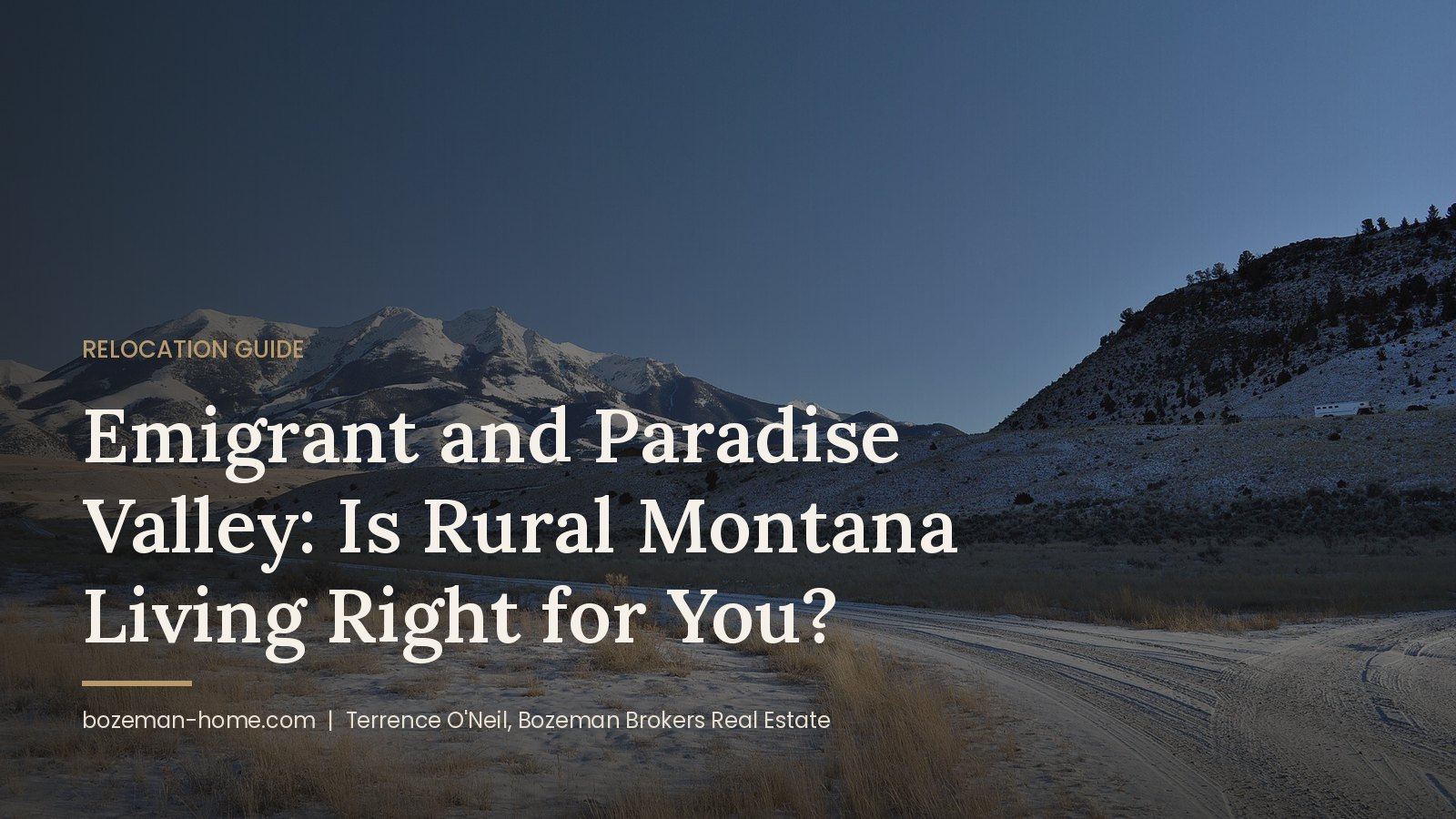
The short answer: Emigrant is a small community in the heart of Paradise Valley, about 25 miles south of Livingston on Highway 89, with the Absaroka Range on one side, the Gallatin Range on the other, and the Yellowstone River running between them. It is one of the most beautiful places to live in Montana and one of the most expensive per acre, with listing data in 2026 showing a median list price around $2.39 million. Rural Paradise Valley living suits buyers who want privacy, land, and views, and who are comfortable driving 25 minutes for groceries and dealing with spotty cell service and the occasional power outage.
When relocating buyers picture “Montana,” many of them are picturing Paradise Valley without knowing its name. This guide covers what life in and around Emigrant is really like, what land and homes cost, and what to check before you buy rural property here.
Where is Emigrant and Paradise Valley?
Paradise Valley is the roughly 50-mile corridor along the Yellowstone River from Livingston south to Gardiner and Yellowstone National Park’s north entrance. Emigrant sits near the middle of it, below Emigrant Peak, one of the most recognizable mountains in the valley.
- Livingston: about 25 minutes north for groceries, the hospital, and schools.
- Yellowstone’s north entrance: about 30 minutes south.
- Bozeman: about an hour, via Livingston and Bozeman Pass.
What is there in Emigrant?
Emigrant is a community rather than a town. You will find the Emigrant General Store, a handful of restaurants, river access points, and Chico Hot Springs a few minutes away in neighboring Pray. Most daily services are in Livingston. That is part of the appeal for people who want quiet, and part of the adjustment for people coming from cities or suburbs.
What residents love most:
- Big, uninterrupted views of the Absaroka Range.
- Fly fishing, floating, and wildlife on the Yellowstone River.
- Trailheads into the Absaroka-Beartooth Wilderness and Gallatin National Forest.
- Dark night skies and real quiet.
- Yellowstone close enough for an afternoon drive.
What does land and housing cost in Paradise Valley?
Paradise Valley is a premium market. Based on 2026 listing data and local reporting:
- Emigrant homes: a median list price around $2.39 million, at about $637 per square foot. Listing prices reflect the mix of large properties and luxury homes on the market, so modest homes can come in well below that.
- Park County land: a median listing of about $21,700 per acre.
- Working ranch land: about $3,000 to $7,000 per acre outside the Yellowstone corridor.
- Recreational land near wilderness or the river: can exceed $20,000 per acre.
For context, Park County’s overall median sale price was about $575,000 in March 2026 according to Redfin, and homes were taking far longer to sell than a year earlier. That slower pace gives buyers more negotiating room than they had during the pandemic years.
Montana is a non-disclosure state, so sale prices are not public record. To understand what a Paradise Valley property is really worth, you need an agent who can pull recent comparable sales from the MLS.
The realities of rural Paradise Valley living
Distance and errands
Groceries, the hospital, pharmacies, and most shopping are in Livingston, about 25 minutes away. People who love living here plan errands into one or two trips a week and keep well-stocked pantries and freezers.
Cell service, internet, and power
Cell coverage can be spotty depending on where the property sits in the valley. Many rural homes rely on fixed wireless or satellite internet, and power outages happen more often than in town. Remote workers should confirm internet options at the specific address and consider a backup generator.
Schools
School options are limited in the valley itself. Map out the bus routes and school options for any property they are considering, and expect older students to travel to Livingston.
Winter
Highway 89 is generally well maintained, but snow, ice, and wind are part of life. Long private driveways need a plan for plowing. Ask the seller how they handle snow removal and what it costs.
Wildlife
Elk, deer, bears, and wolves all live in the valley. Bear-safe trash storage, smart fencing, and respect for wildlife corridors are part of being a good neighbor here.
What to check before buying rural land
- Water. Ask for well logs, flow tests, and water quality results. If you plan to irrigate, ask exactly what water rights come with the property.
- Septic. Have the system inspected and confirm it is permitted for the number of bedrooms.
- Access and easements. Confirm legal access to the property and review any easements for roads, utilities, or conservation.
- Conservation easements. Some Paradise Valley land is protected by conservation easements that limit building or subdivision. These protect views and wildlife, and you need to understand them before you buy.
- Floodplain. Properties near the Yellowstone River may sit in mapped flood zones, which affects insurance and building.
- Fire risk. Ask about defensible space and homeowners insurance availability, which has become a bigger question across the West.
- Covenants and rentals. If you hope to rent the property part of the year, confirm what zoning and covenants allow.
Primary home vs. second home in Paradise Valley
Many Paradise Valley buyers are purchasing a second home. Montana’s 2026 property tax system matters a lot here. Primary residences that qualify for homestead status pay lower tax rates on a sliding scale, while second homes and short-term rentals are taxed at a flat higher rate. For a high-value property, the difference can be large. If you plan to live in the home at least seven months a year, apply for homestead status as soon as you move in.
Is Emigrant right for you?
Emigrant and Paradise Valley tend to fit if you want:
- Land, privacy, and views more than convenience.
- A home base without a daily commute.
- Fishing, hunting, hiking, and wildlife out your door.
- A rural setting and are comfortable being self-reliant in winter.
If you want a little more convenience with similar scenery, Livingston offers town services with Paradise Valley right outside your door.
How I help buyers find land in Paradise Valley
Rural property is where an experienced local guide matters most. If you plan to visit, I build a scouting day that covers several properties along the valley, with stops to check cell coverage and drive the access roads. If you are buying from a distance, I walk the land with you on video, review well and septic records, coordinate inspections, and keep every deadline on track until closing.
Buying a home vs. building in Paradise Valley
Many Paradise Valley buyers wonder whether to buy an existing home or buy land and build. Both can work. Here is how they compare.
Buying an existing home
- You can move in sooner and know your total cost up front.
- Wells, septic, power, and access are already in place, so there are fewer unknowns.
- Inventory is limited, so you may need to be patient for the right home.
Buying land and building
- You can design for the views, the wind, and the way you live.
- You will need to plan for a well, septic system, power, and a driveway, each with its own permits and costs.
- Building in a rural area takes time. Contractor availability, weather, and permitting all affect the schedule.
- Covenants, conservation easements, and floodplain rules can limit where and how you build.
If you are leaning toward building, I recommend talking to a local builder and getting a well and septic feasibility check before you buy the land, not after.
A week in Paradise Valley
Life here follows the land and the seasons. A typical week might include one or two trips to Livingston for groceries and errands, mornings on the Yellowstone River, an afternoon at Chico Hot Springs, and evenings watching the light change on the Absarokas. Neighbors are spread out, but the community is close. People help each other with snow, fences, and the occasional runaway cow.
Visiting vs. buying remotely in Paradise Valley
Rural land is where seeing a property in person pays off the most. Many of my buyers plan a day in the valley to walk the land, test cell service, and drive the access road. If you cannot travel, I walk the property with you on video, check coverage on site, and send you a full report on water, septic, access, and any easements.
Frequently asked questions
Where is Emigrant, Montana?
In Paradise Valley, about 25 miles south of Livingston on Highway 89 and about 30 minutes from Yellowstone’s north entrance.
How expensive is land in Paradise Valley?
2026 data put Park County’s median land listing around $21,700 per acre, with recreational parcels near the river or wilderness often higher.
Is there good internet in Paradise Valley?
It varies by property. Many rural homes use fixed wireless or satellite. Always confirm service at the address.
Can I build a house in Paradise Valley?
Often yes, but check zoning, covenants, conservation easements, floodplain maps, water, and septic before you buy a lot.
Picturing life in Paradise Valley? Book a free relocation call and I will help you find the land or home that fits the way you want to live.